Executive Director
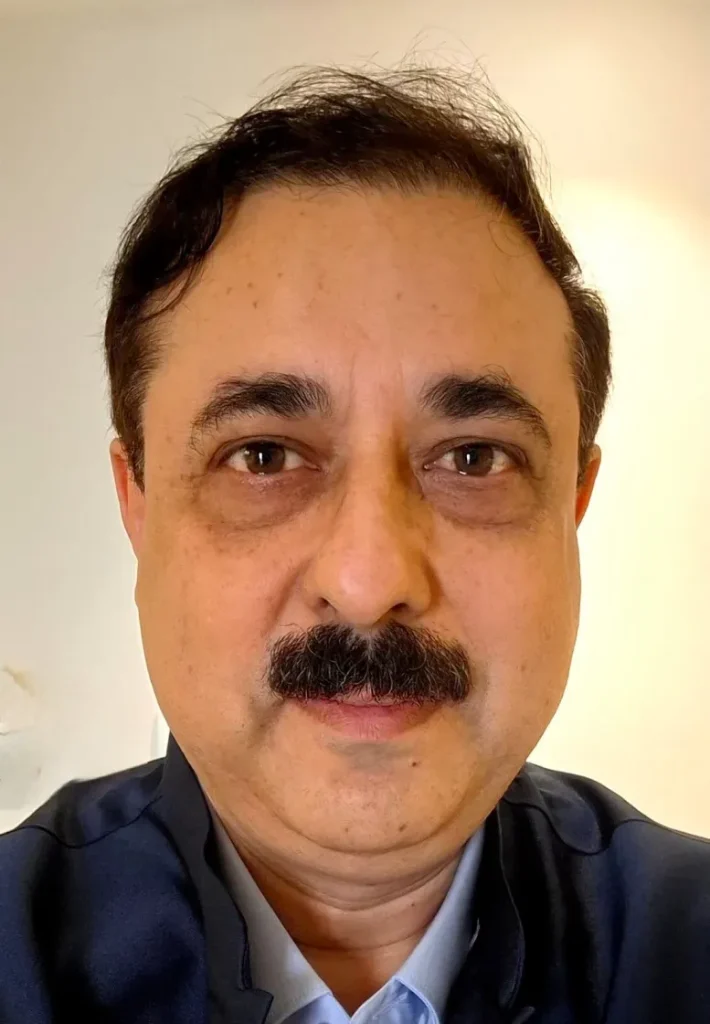
Prof. Pawan K Dhar
Lab Name : Metabolic Engineering and Synthetic Biology Lab
Personal Website : https://www.syntheticbiology.in/
- pawan.dhar@cvjsynbio.org
Centre for Synthetic Biology and Bio-Manufacturing, CUSAT
Pawan K. Dhar is a synthetic biology pioneer, academic administrator, bioentrepreneur, and science-policy advisor with over three decades of global experience across India, Japan, Singapore, and Germany. He is the founding Executive Director of the CVJ Centre for Synthetic Biology and Biomanufacturing in Kochi — India’s first dedicated centre of its kind — and former Dean of the School of Biotechnology at Jawaharlal Nehru University. He has built research groups at RIKEN (Japan) and A*STAR (Singapore), developed the internationally recognised “Dark Genome” drug- and enzyme-discovery platform, and co-founded three biotechnology companies — Foresight Biotech, ClearMeat, and Quantum Codon. He founded the world’s first Systems & Synthetic Biology journal with Springer (co-led with Prof. Ron Weiss of MIT) and has advised the Government of India on synthetic-biology policy. He holds a PhD in Human Genetics from Banaras Hindu University.
Breif Research Statement
For nearly fifty years, biology concentrated on the ~2% of the human genome that codes for proteins and dismissed the remaining 98% as “junk.” Our research program rests on the conviction that this was one of the great misreadings in modern science — and on the demonstrated reality that the genome’s dark matter is a vast, untapped reservoir of functional molecules waiting to be designed.
The founding result came in 2009, when our group provided the first experimental proof that functional proteins can be synthesized from naturally silent, non-coding DNA — building non-natural parts from natural genomic templates. What began as a single experiment has, over fifteen years, grown into a sustained discovery platform.
The dark genome come into two functional categories. Type I — non-expressing DNA — comprises intergenic regions, antisense strands, reverse open reading frames, repetitive elements, and pseudogenes. Type II — non-translating RNA — comprises introns, ribosomal and transfer RNA, microRNA, and long non-coding RNA. Conventional biology treats both as silent; our work shows that, once computationally decoded and synthetically expressed, both yield novel, bioactive peptides, proteins, and pathways.
The evidence has accumulated across diseases: anti-malarial and anti-Alzheimer’s peptides predicted from intergenic sequences, functional proteins reconstructed from pseudogenes, antimicrobial peptides from Drosophila non-coding DNA, and anti-cancer activity from E. coli intergenic-derived peptides. A flagship discovery is a class we named tRNA-encoded peptides (tREPs): tREP-18 showed potent antileishmanial activity at nanomolar concentrations (IC₅₀ ≈ 22 nM) while remaining safe to human cells — the first evidence that transfer RNA, long considered purely non-coding, can be repurposed into therapeutically relevant molecules.
Together these results point to what I call Functional Genomics 2.0 — a shift from studying individual genes to treating the entire non expressing genome as a design canvas. .
Our long-term goal is to establish the dark matter of the genome as a foundational source of new biology: a systematic route to first-in-class therapeutics, enzymes, and pathways drawn not from outside the body, but from the unread instructions already within our genomes. This is not a footnote to molecular biology — it is a new design dimension for it, and a roadmap for the next generation of experimental and computational biologists.
Teaching
Prof. Dhar has more than three decades of teaching and academic mentoring experience across leading institutions in India, Japan, and Singapore. He has taught and developed courses in synthetic biology, systems biology, genetics, molecular biology, bioinformatics, genome engineering, and biotechnology innovation. He has established new academic programs and research centers, including India’s first Centre for Systems and Synthetic Biology and a recent M.Tech. program in Synthetic Biology and Biomanufacturing. Throughout his career, he has supervised doctoral students, mentored young faculty and researchers, and promoted interdisciplinary, research-driven education at undergraduate, postgraduate, and doctoral levels. Currently, he is teaching Synthetic Biology course as a part of M.Tech program jointly with CUSAT.
Collaborations
Industry
- SciGenom, Kochi
- Alstonia Bio, Kochi
Academia
- NCAAH, CUSAT, Kochi